Preamble
I first heard of the Serum Institute of India (SII) during my time at Aventis (now Sanofi), when I was Senior Director of Medical & Regulatory Affairs with responsibility for India, Sri Lanka and Nepal from December 2007 to July 2011. Even then, I knew SII as a rapidly growing Indian vaccine manufacturer whose reach was extending beyond India.
Years later, from July 2022 to August 2024, as Vice President, Asia-Pacific at Novavax, I encountered SII again as one of our regional partners. My responsibilities covered Asia-Pacific, including Australia and New Zealand. Aligning Medical Affairs activities was one of my responsibilities, and I interacted with partners including SII, Takeda in Japan and SK bioscience in South Korea. Biocelect was our market and distribution partner in Australia and New Zealand.
My one regret is that I never visited SII's manufacturing plant in Pune. Having followed its rise and later interacted with it as a partner, I would have liked to see its operations firsthand. Perhaps that is one visit I should have made.
How did a company founded in Pune become so important to global immunisation, and what can Malaysia learn from its experience?
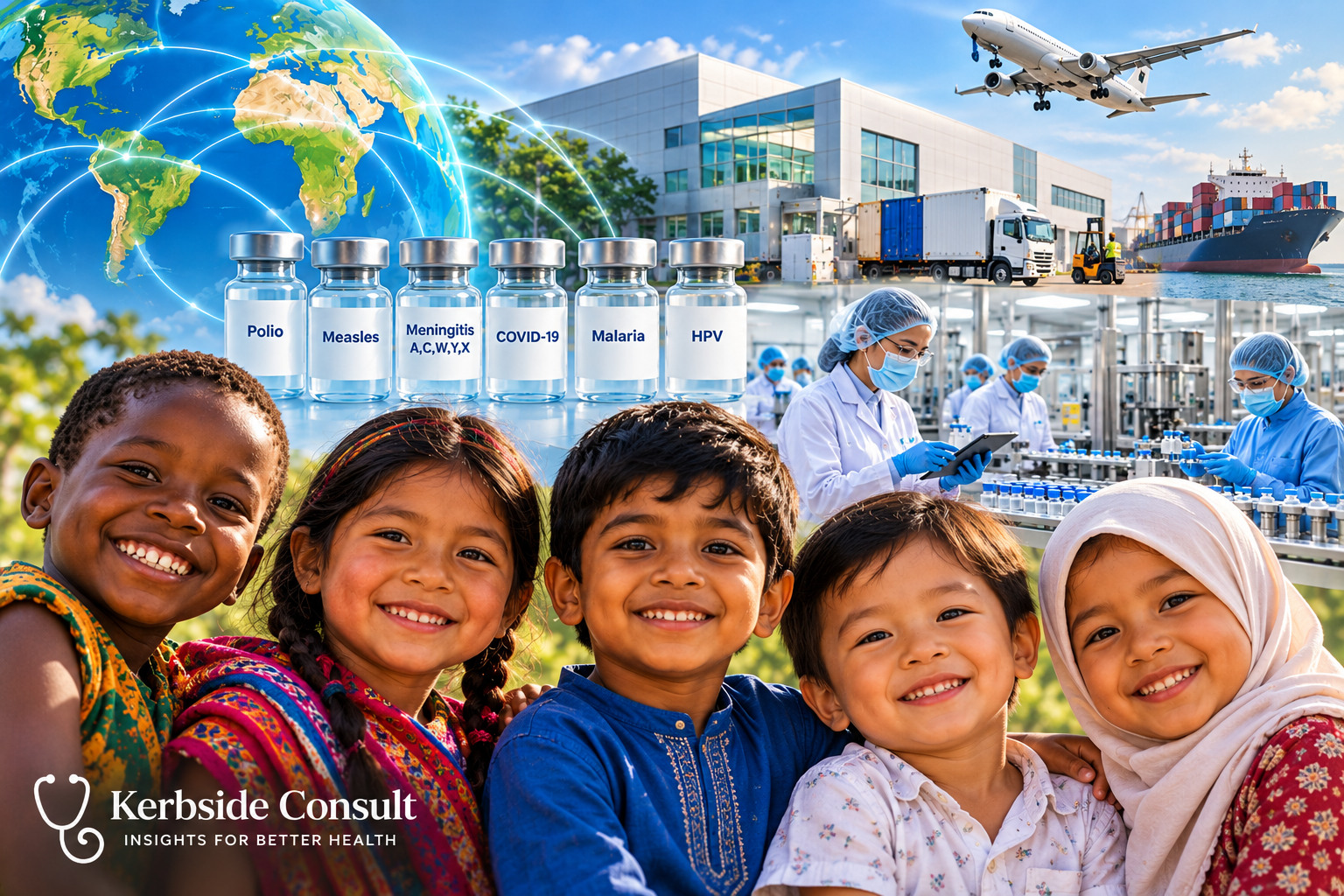
1. From Pune to the world
Founded in 1966 by Cyrus Poonawalla, SII developed from an Indian producer of biological products, including antitoxins and antivenoms, into a major manufacturer of childhood vaccines. Its evolution was gradual: from serum-based biological products to routine immunisation vaccines, then to international supply. That progression required sustained investment not just in manufacturing capacity, but also in reliable production processes, quality systems, regulatory approvals and, perhaps most importantly, its people — the scientists, researchers, production personnel, quality and regulatory professionals, and management teams who made that growth possible. Manufacturing scale and access to international markets reinforced one another. The company describes itself as the largest vaccine manufacturer by doses produced and sold; that is a company-reported volume measure, not a ranking by revenue or independently verified doses administered. [1]
SII's international expansion included the acquisition of Bilthoven Biologicals in the Netherlands in 2012. The more important measure of its influence, however, is the extent to which affordable, quality-assured vaccines became available to immunisation programmes. [1]
2. Affordability, quality and vaccine access
A vaccine can be scientifically effective yet fail to protect a population if it is unaffordable or unavailable. Large-volume production can lower unit costs, but vaccines are not ordinary commodities. They require validated manufacturing processes, batch consistency, cold-chain controls and continuous quality oversight. Equally important are accurate demand forecasting, advance production planning and timely delivery. Vaccine manufacturing involves long lead times, and getting the quantities and timing right is essential — both to prevent shortages and to minimise wastage.
WHO prequalification assesses vaccine quality, safety, efficacy and suitability for international procurement. It does not replace each country's regulatory responsibilities. For manufacturers supplying UNICEF and other international programmes, it is a critical gateway. [2]
3. Meningitis: a public-health partnership
MenAfriVac is one of SII's strongest pre-COVID examples. Developed through the WHO–PATH Meningitis Vaccine Project and manufactured by SII, it was introduced in Africa's meningitis belt in 2010 to tackle meningococcal serogroup A disease. Before MenAfriVac, recurrent serogroup A meningitis epidemics caused major public-health disruption across the African meningitis belt. Mass vaccination beginning in 2010 substantially reduced serogroup A disease in participating countries. That outcome depended on surveillance, public-sector delivery and international collaboration as well as vaccine manufacture. [3]
The subsequent MenFive vaccine was developed through a 13-year SII–PATH collaboration, targeting meningococcal serogroups A, C, W, Y and X. SII and PATH announced WHO prequalification in July 2023. These projects show how public-health priorities, technical collaboration and affordable manufacturing can come together. [4]
4. Beyond business: donations and humanitarian support
SII's contribution is not confined to commercial supply. Its corporate social responsibility records describe donations of measles and rubella vaccines and of NASOVAC, its intranasal H1N1 influenza vaccine. The company also describes subsidised supplies to some recipient countries. These are SII-reported contributions; the exact recipient-level quantities should not be treated as independently audited totals. [5]
A distinction matters. Vaccines donated directly by a manufacturer are not the same as vaccines purchased and donated by a government, nor those procured with donor funding through mechanisms such as COVAX. Each can advance access, but the source of funding and responsibility should be described correctly. Affordable manufacturing and direct philanthropy are complementary, not interchangeable. [5][6]
5. COVID-19: scale meets national priorities
During COVID-19, SII manufactured Covishield, the Oxford–AstraZeneca vaccine, at scale. SII-produced doses formed part of early COVAX deliveries, including the first international shipment to Ghana in February 2021. [6]
India's severe COVID-19 wave in 2021, combined with national priorities and export restrictions, disrupted international supply expectations. WHO and COVAX documented delays affecting deliveries from SII. This was a structural lesson: reliance on a small number of manufacturing locations creates vulnerability, even when the manufacturer is highly capable. [7]
The episode should neither erase SII's contribution nor be romanticised. Governments, manufacturers, purchasers and donors all faced difficult trade-offs in a fast-moving emergency.
6. Novavax, SII and Covovax
Novavax developed the recombinant protein-based COVID-19 vaccine NVX-CoV2373, using its Matrix-M adjuvant. SII manufactured the vaccine under partnership arrangements; Covovax was the SII-associated brand for specified markets. WHO granted Covovax Emergency Use Listing in December 2021. [8][9]
This was different from Covishield, which used the Oxford–AstraZeneca viral-vector platform. It also illustrates why vaccine development, technology transfer, manufacturing, regulatory activities and distribution should not be conflated.
My regional experience reinforced how much coordination is required among scientific, regulatory and commercial partners, even when the vaccine technology itself is already established.
7. Malaria: Oxford R21 and Novavax Matrix-M
The R21/Matrix-M malaria vaccine is another example of specialised collaboration. The R21 antigen emerged from Oxford's research; Novavax contributed the proprietary Matrix-M adjuvant; and SII contributed to development and manufacturing scale-up. Matrix-M enhances immune responses; it is not itself the malaria antigen. [10]
WHO recommended R21/Matrix-M in October 2023 and prequalified it in December 2023. In the multicentre phase III trial, 12-month efficacy against a first clinical malaria episode was 75% (95% CI 71–79) at seasonal-transmission sites and 68% (95% CI 61–74) at standard sites. These are trial endpoint estimates; WHO's policy summaries sometimes report different figures because of differing analyses and schedules. There has been no direct head-to-head trial establishing superiority over RTS,S/AS01. [11][12]
WHO's vaccine-safety committee called for continued monitoring, including febrile seizures, severe malaria and mortality outcomes. Vaccination complements rather than replaces bed nets, vector control and treatment. [13]
8. From manufacturing to development partnerships
SII's portfolio spans established childhood vaccines, licensed manufacturing and collaborative development. MenFive and R21/Matrix-M illustrate the latter; Covovax illustrates a distinct technology and manufacturing partnership. Describing every product as either invented by SII or merely contract-manufactured would be inaccurate.
The company's CERVAVAC quadrivalent HPV vaccine, targeting types 6, 11, 16 and 18, received WHO prequalification in September 2026; SII announced this on 5 October 2026. This milestone expands the potential for international procurement but does not, by itself, establish vaccination coverage or programme impact. [14]
9. The difficult economics of vaccines
Manufacturing vaccines requires long-term investment in facilities, personnel, process validation, quality assurance and regulatory systems. Production commitments may precede certainty about demand. During a pandemic, shortages can be followed by unused capacity as demand shifts.
Affordable prices therefore depend not only on scale, but on stable procurement, financing, predictable demand and resilient supply chains. International vaccine equity cannot be delivered by manufacturers alone.
10. Lessons for Malaysia and ASEAN
Malaysia's National Vaccine Development Roadmap 2021–2030 provides a framework for thinking about domestic capabilities. The SII example suggests that sustainable vaccine capacity is built over decades through science, training, quality systems, regulatory competence, partnerships and dependable demand. [15]
Local fill-and-finish capacity is valuable but differs from antigen manufacturing, adjuvant production and full end-to-end development. For Malaysia, the practical questions include which vaccine platforms to prioritise, how to develop technical and quality-assurance personnel, whether procurement volumes can sustain investment, and how to secure credible technology-transfer and regional purchasing partnerships. ASEAN collaboration could improve resilience, provided investments reflect realistic demand and regulatory capability. The goal should not be symbolic self-sufficiency, but reliable access to quality-assured vaccines.
The World Bank’s 2023 Malaysia Country Case Study provides a useful reality check. It recognised Malaysia’s strengths in immunisation delivery, clinical research, pharmaceutical manufacturing and vaccine fill-and-finish, while identifying gaps in end-to-end human vaccine production, specialised skills, technology transfer and access to a sufficiently large market. These were findings about capabilities assessed around 2021–2023, not a definitive description of Malaysia’s position in October 2026. [17]
The companion World Bank economic analysis modelled a benefit–cost ratio of approximately 9.5 for a national-only investment scenario, compared with 30.9 for regional cooperation and 35.1 with regional pooled procurement. These are projections dependent on assumptions about vaccine demand, effective health systems and equitable delivery—not observed returns or guaranteed commercial profits. [18]
For Malaysia, the question is therefore not whether we should manufacture every vaccine ourselves, but which capabilities we can develop and sustain, and how we can contribute to regional vaccine security. That requires long-term planning, skilled people, credible technology-transfer partnerships, regulatory cooperation, dependable demand forecasting and markets large enough to justify continued investment.
Malaysia's vaccine ambitions are not new. NineBio Sdn Bhd was among the earlier initiatives intended to develop national biotechnology and vaccine-related capabilities. [16] Its experience reminds us that establishing an organisation or announcing a national ambition is only the beginning. Sustained investment, scientific and technical expertise, skilled personnel, realistic demand forecasting, commercial viability, transparent governance and accountability are equally important. The lesson from SII is that vaccine manufacturing capability must be built, maintained and strengthened over decades, not simply announced as a national objective.
11. Conclusion
When I first heard of SII during my Aventis years, it was already growing beyond India. Encountering it again during my Novavax years offered a different perspective on the partnerships behind vaccination programmes. My regret about not visiting Pune remains personal, but the larger story is public-health access.
SII's record includes manufacturing at scale, international development partnerships, affordable vaccines and company-reported humanitarian donations. COVID-19 also revealed how fragile supply can become when global demand and domestic emergencies collide.
The real measure is not simply the number of doses produced. It is whether safe, effective, quality-assured vaccines reach the people who need them—and help prevent disease over time.
Editorial Independence and Disclosure
This article is an independent, non-sponsored review written for Kerbside Consult. It has not been commissioned, funded or sponsored by the Serum Institute of India, Novavax or any other organisation mentioned.
The author previously held senior positions at Aventis (now Sanofi) and Novavax, as disclosed in the preamble. These professional associations provide historical context but do not imply endorsement of this article by those organisations.
The views and assessments expressed are those of the author, based on publicly available information and personal professional experience. No organisation mentioned has exercised editorial control over the content.
Sources and further reading
- Serum Institute of India. About Us.
- World Health Organization. Vaccine prequalification programme.
- World Health Organization. MenAfriVac prequalification record.
- PATH. Multivalent meningococcal meningitis vaccine from Serum Institute of India achieves WHO prequalification (MenFive).
- Serum Institute of India. Corporate Social Responsibility.
- World Health Organization. First COVAX international vaccine shipment to Ghana. 24 February 2021.
- World Health Organization. COVAX updates participants on delivery delays for vaccines from Serum Institute of India (SII) and AstraZeneca. 25 March 2021.
- World Health Organization. WHO lists 9th COVID-19 vaccine for emergency use. 17 December 2021.
- Novavax. Partnerships.
- World Health Organization. WHO recommends R21/Matrix-M vaccine for malaria prevention. 2 October 2023.
- Datoo MS et al. Phase III trial of the R21/Matrix-M malaria vaccine (PubMed).
- World Health Organization. WHO prequalifies a second malaria vaccine. 21 December 2023.
- World Health Organization. Global Advisory Committee on Vaccine Safety: R21/Matrix-M malaria vaccine.
- Serum Institute of India. CERVAVAC receives WHO prequalification. October 2026.
- Ministry of Science, Technology and Innovation (MOSTI), Malaysia. National Vaccine Development Roadmap 2021–2030.
- Emergent BioSolutions and Ninebio Sdn. Bhd. Announce Joint Venture in Malaysia (press release, as published by Technology Networks).
- World Bank. ASEAN Capacity for Vaccine Research and Development and Production: Malaysia Country Case Study (2023).
- Schäferhoff M et al. Investing in Vaccine Development and Manufacture in ASEAN. World Bank Malaysia Hub Research & Policy Brief (10 April 2023).